
Sizzling chef Fraser Cameron’s mission to inspire young talent
If we were looking for an Ambassador who can understand and encourage young talent, you would struggle to find a better choice than 28-year-old Fraser Cameron, head chef at The Globe Inn in Dumfries.
He’s just returned from his Legacy Scholarship, which involved a unique five-day stage at the world-renowned Ritz Hotel in London. This was hot on the heels of a two-week stint at Le Manoir Aux Quat' Saisons, the double Michelin-starred restaurant and manor house hotel established by celebrity chef Raymond Blanc.
Named the Scottish Young Chef of the Year - among numerous other accolades - Fraser has built his path from kitchen porter to head chef through relentless hard work and a commitment to nurturing new talent.
His journey is a brilliant example of forging a fast and successful career path in the food & drink industry, but he is just as passionate about what the industry can give back.
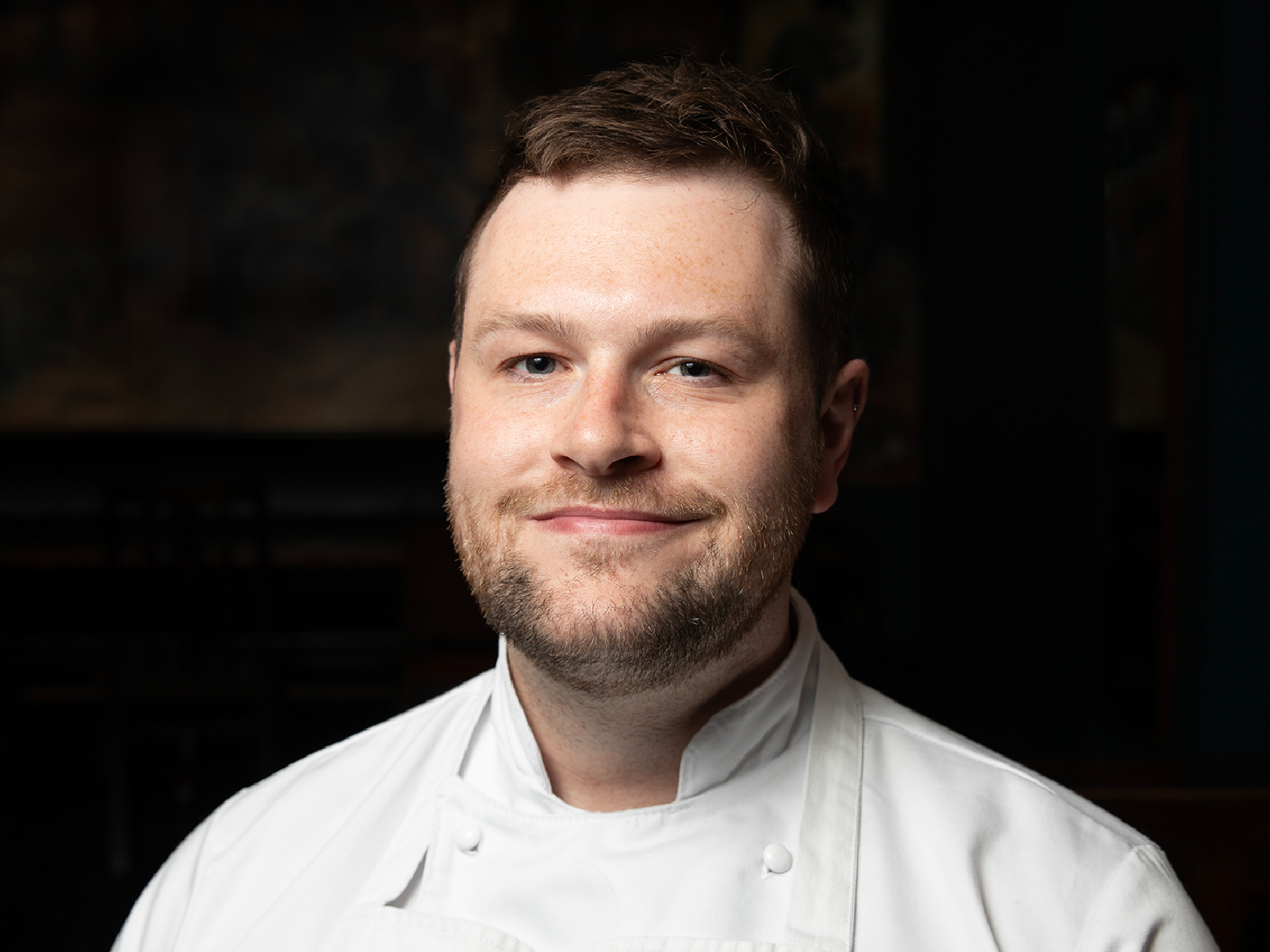
“If you want longevity in your business, you need to have fresh talent, fresh energy and fresh passion”
Lunch money
Fraser’s passion for the kitchen first showed at 13 while working after school as a kitchen porter, a job he took on “to earn better lunch money”.
Despite being through the back washing dishes, he was always trying to look through the door to see what the chef was doing. His interest paid off and soon he was invited through to cut the carrots and prepare vegetables and garnishes.
He soon found he’d fallen for the sense of camaraderie in a kitchen so despite doing well at school, at the age of 17 Fraser made the decision to leave and pursue professional cookery at Perth College.
“I’d set my heart on it so I thought if I’m going to do this, I have to push to see how far I can go. I had to give it absolutely everything,” he said.
His dedication was immediately rewarded with an opportunity to work at the renowned Restaurant Andrew Fairlie through the Andrew Fairlie Scholarship.
He impressed the team enough to stay for nine months, even spending his 18th birthday working there, which he describes as “pretty epic”.
Fraser, who admits to struggling with imposter syndrome, quickly found his confidence and was even allowed to run the pass for a couple of nights - a rare opportunity for a relatively inexperienced chef.
A lesson in resilience
Fraser likes to stress that success is not a straight line, urging young people to look past the “polished and clean ideal world” often seen on social media.
An example is his own experience competing for Scottish Young Chef of the Year, a title which took him three attempts to win.
During his second attempt, he cut his finger quite badly in the middle of the competition but he uses this story to show that losing is not the end of the world.
“You learn from it, and you use that to progress the next time,” he said.
And Fraser finds public cooking demonstrations are a sure-fire way to grab attention as an Ambassador.
“I find that going into schools and doing demonstrations is fantastic. If you go in and talk to them about the variety of roles, you can see the cogs start turning,” he said.
“And then you put up a dish that they maybe wouldn’t like – fish is a great example.
“So we always try and do scallops, and you take it in the shell. You show them opening it and they’re all horrified that it looks like this ball of snot.
“But you cook it and 95% of the time, they'll try it and go ‘oh my God, I didn't know I liked that’.
“It just opens a whole new world.”
Appeal of sustainability
Fraser is committed to teaching the next generation about Scottish provenance and the importance of sustainability, working with partners like Quality Meat Scotland on “farm to fork” projects.
He has established a kitchen garden at Comlongon Estate which supplies The Globe Inn with fruit, vegetables, herbs and flowers, as well as eggs from their Scots Dumpy chickens. They also have their own bees for honey and forage the grounds for mushrooms.
He finds the sustainability angle - feeding kitchen waste back to the chickens to lower the carbon footprint - particularly resonates with young people.
A core part of Fraser’s Ambassador work is also challenging employers and the public to be more inclusive. He argues that the focus should be on an individual’s passion and willingness to learn.
He does extensive work with Dumfries charity The Usual Place, where 75% of the workforce has a disability. He says that these employees often show a far greater level of passion and work ethic compared to someone who sees the job as a stop-gap. For him, hospitality has a role for everyone.
He explains that the high standards and structured, repetitive nature of fine dining preparation is a perfect fit for some people.
“I firmly believe there is a role for everyone and I defy anyone to say there’s not something that wouldn’t appeal to somebody,” he said.
Employer’s role in nurturing talent
When speaking to employers about the value of encouraging and supporting employees to become ambassadors, Fraser is direct: businesses need to invest in the next generation.
“If you want longevity in your business, you need to have fresh talent, fresh energy and fresh passion,” he said.
He believes that if employers are not prepared to put the work in with young people, then they shouldn’t expect loyalty or commitment in return. He urges businesses not to shoot down new ideas, even from junior staff, especially if they could lead to profit.
“It’s so important to develop young people, and I’m speaking from my personal experience of being a young person in an industry where sometimes you’re not given a chance,” he said.
“I’ve worked with some young people and the level and output of work is far superior to somebody twice their age, and they’re doing the same job at a fraction of the wage.”
He summarises his philosophy with a powerful message on workplace culture: “the grass is greener where it’s watered”.
“All you really need in this industry is the passion and the willingness to come to work and and learn - anything else can be taught.”